Subterranean humidity in South King County and Pierce County creates elevated equilibrium moisture content in structural joists, particularly near the Green River basin and Stuck River Valley. Moisture beetles and…
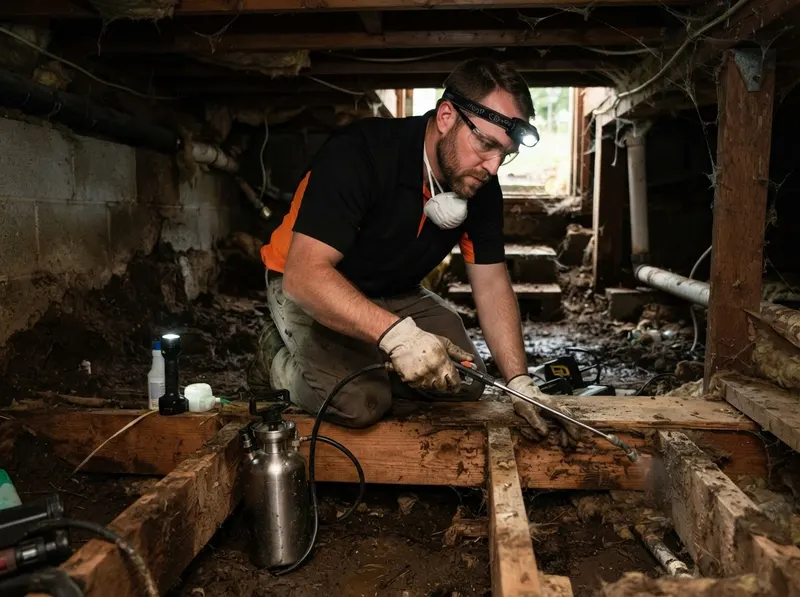
Subterranean humidity in South King County and Pierce County creates elevated equilibrium moisture content in structural joists, particularly near the Green River basin and Stuck River Valley. Moisture beetles and wood-boring anobiids do not target sound, arid timber; they colonize softwoods where lumber fiber moisture exceeds 16 to 18 percent. According to the USDA Forest Service, wood-boring beetle larvae can feed silently within floor joists, rim boards, and sill plates for 2 to 5 years before emerging as adults. SilverNest Insect Control implements an ecological timber-salvation standard: treating the underlying biological vulnerability rather than saturating living quarters with high-toxicity organophosphates. Properties along the Riverwalk district and Lea Hill slopes frequently exhibit subterranean water accumulation that attracts plaster beetles (family Latridiidae), which feed on micro-fungal hyphae across damp wall cavities. Remediation combines targeted drying protocols with mineral-derived disodium octaborate tetrahydrate, penetrating up to several inches into the timber core to stop wood-boring digestion.
Selecting localized mitigation over whole-structure chemical fumigation depends on structural accessibility and moisture boundaries. When structural framing remains accessible through crawlspaces or unfinished basements, topical borate micro-injections offer permanent residual mineral protection because borates do not break down over time. Conversely, homes with enclosed drywall ceilings over infested support timbers require strategic sub-surface access ports rather than general aerosol bombing. The Environmental Protection Agency notes that targeted borate mineral applications dramatically minimize indoor pesticide exposure compared to volatile chemical fogs. Homeowners in West Hill and Lakeland Hills choosing targeted borate applications protect pet paws and children's crawl areas while halting structural damage. The trade-off is mechanical drying requirements: borates preserve the timber matrix, but crawlspace foundation vents must adhere to standards defined by the International Code Council, often requiring auxiliary ground moisture membranes to keep framing below the 12 percent moisture threshold where moisture beetles can survive.
1. Structural moisture mapping: Technicians calibrate pinless and invasive resistance meters against framing members to locate hidden pockets above 18 percent moisture.
2. Species identification: Larval frass, exit hole diameters (ranging from 1/16-inch pinholes for powderpost beetles to 1/8-inch circular openings for anobiids), and timber galleries are examined under digital magnification.
3. Botanical borate application: Technicians apply water-soluble mineral borates directly to raw lumber, crystallizing within the cellular sapwood.
4. Void and perimeter protection: Low-pressure injection deposits botanical silica and botanical insect barriers into unexposed wall voids and along crawlspace foundation ledges.
5. Post-treatment evaluation: Follow-up moisture verification ensures timber drying progress across subflooring and rim joists.
Every job gets a firm, written price after a free on-site visit.
For standards, safe disposal, and service guidance on PEST CONTROL SEVICE in Auburn, WA, useful references include U.S. EPA, ENERGY STAR, U.S. Dept. of Energy, Consumer.gov, U.S. Census Bureau, and Google Maps. General consumer and small-business resources are available from USA.gov, Better Business Bureau, FTC Consumer Advice, U.S. Small Business Administration, and Ready.gov.
Tell us about your moisture beetle and wood borer mitigation job in Auburn and we'll send a clear, written quote, usually the same day.
 SilverNest Insect Control